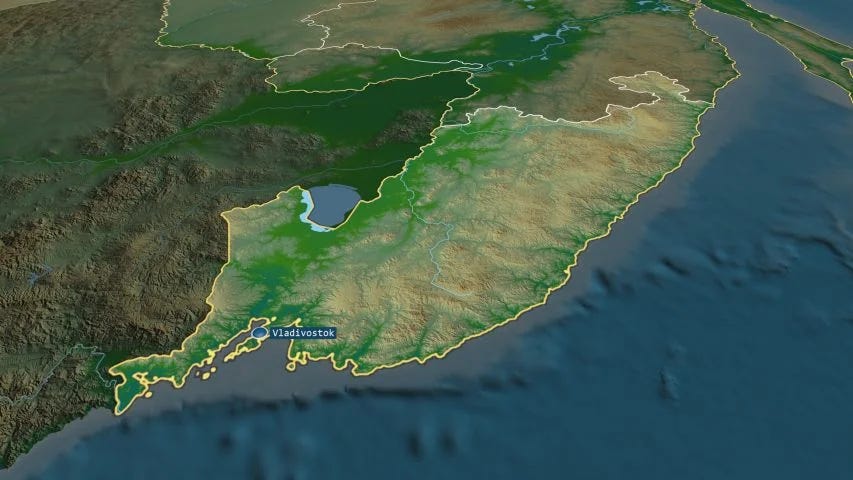
Note the small abutment with the DPRK at the Southwestern corner.
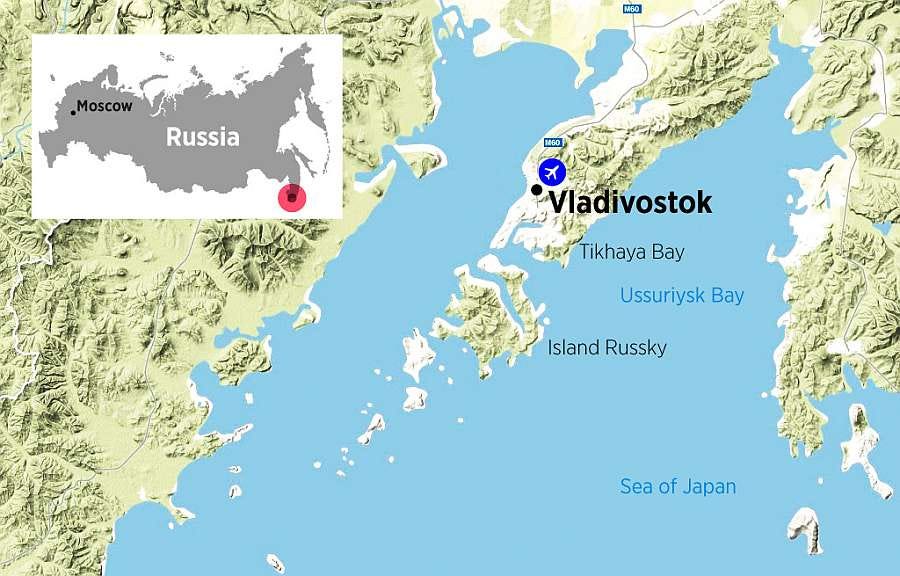
The unique geography surrounding Vladivostok.
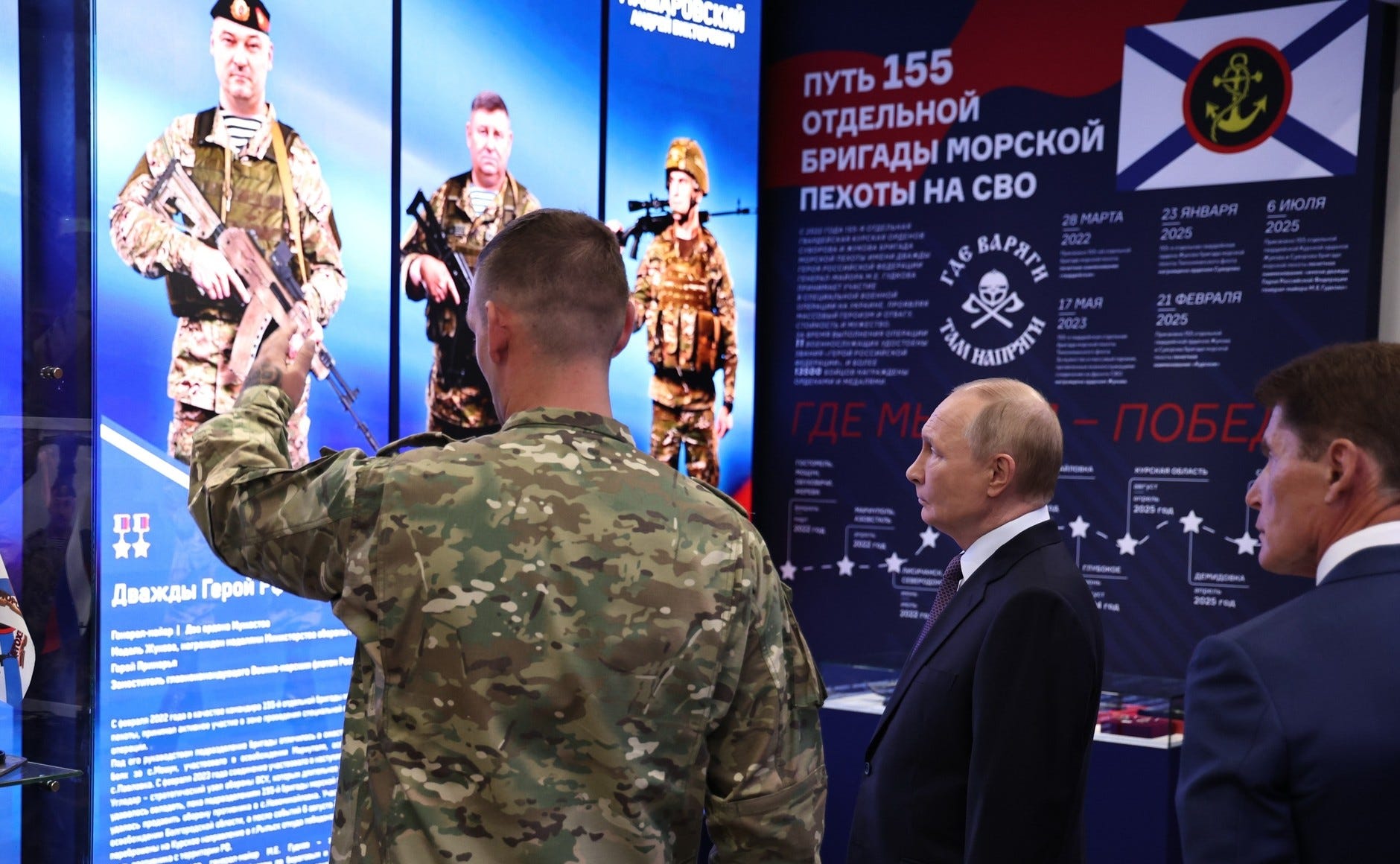
Putin’s visit began with a tour of the “National Center—Russia” in Primorsky which houses several exhibits and schools. One is the Far Eastern Federal University which hosts “an interactive area dedicated to the 155th Separate Guards Kursk Marine Brigade named after twice Hero of Russia, Major General Mikhail Gudkov.”
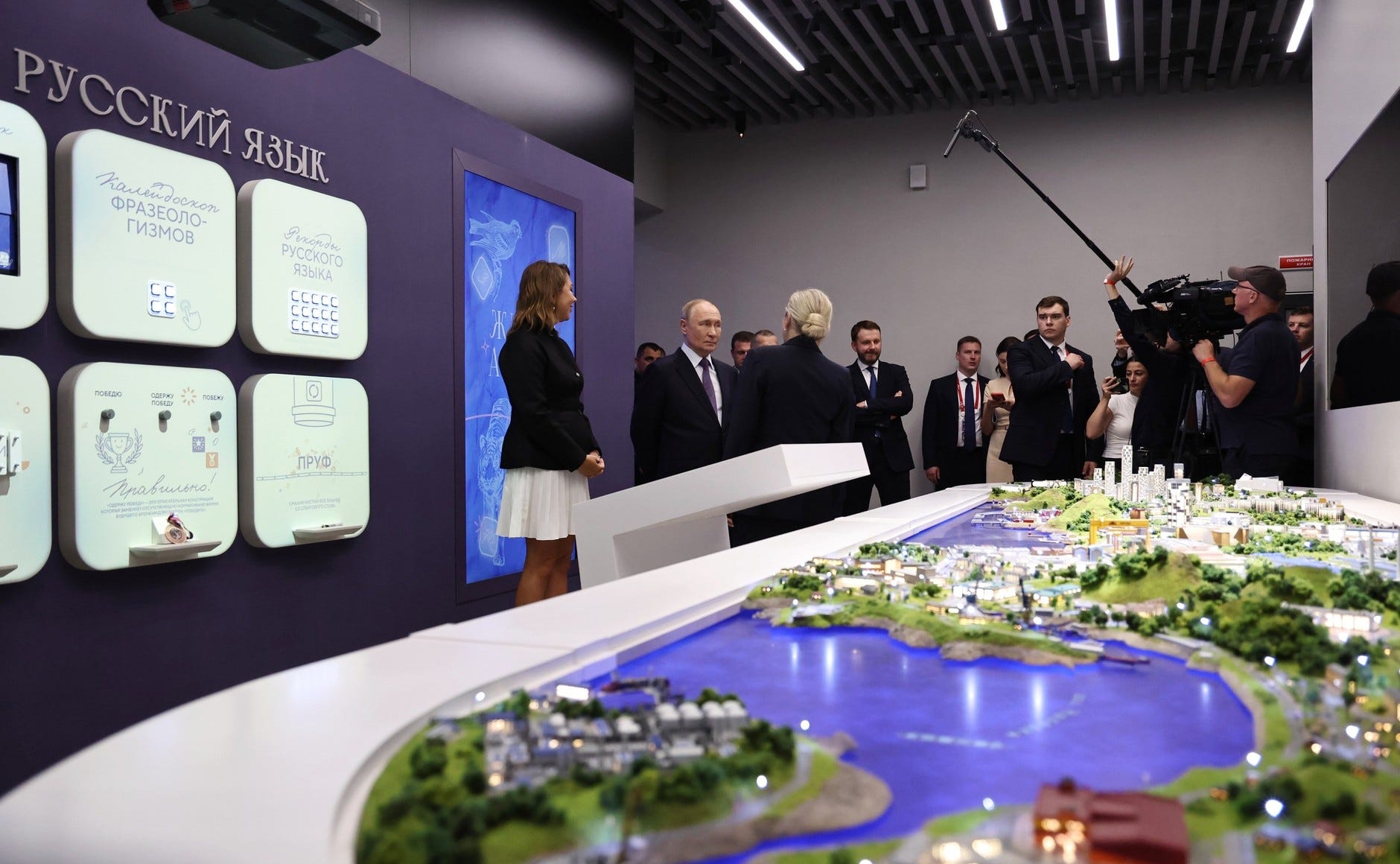
Putin also met with pupils of the Center for Military Sports Training and Patriotic Education and conversed with them in this video. The tour included a large model of the future look of the complex and its surround. This was the best image provided:
Next on the agenda, Vladimir Putin chaired a meeting on development of the fuel and energy complex of the Far Eastern Federal District. After the meeting, Putin held talks with those who would join him on the stage during the Eastern Economic Forum’s plenary session that is taking place today. Now for the meeting:
V. Putin: Good afternoon, dear colleagues!
Today, on the eve of the plenary session of the Eastern Economic Forum, where the strategic objectives of the region's development will be discussed, I propose to take a closer look at the situation in one of the key sectors, namely, the energy sector of the Russian Far East.
We see that the Far East (thanks, by the way, to our joint efforts, for which I would like to thank you all; this is really the result of our joint teamwork; this development would not have taken place at the current pace) is developing at an accelerated rate. In recent years, we have created landmark facilities, industrial facilities, and infrastructure that have actually changed the face of the federal district, its economy, and its social sphere.
Today, new facilities were also opened. These include the Artyom multimodal logistics center, the Khabarovsk international airport terminal, the first building of the Innovation Science and Technology Center, and others.
I would like to emphasize that the advanced development of the Russian Far East is undoubtedly our national priority. We must continue to increase the growth rate and strive to maximize the competitive advantages and potential of the Far Eastern Federal District. Our goal is to ensure the economic development of the region with all the necessary resources, including energy resources.
At the time, we were instructed to prepare a programme for developing energy capacity in the Far East until 2050, as well as to identify sources of funding for this programme. Today, I would like to hear about what has been done and what remaining issues there are.
Among the key tasks is the sustainable gas supply of all the district's regions. According to the Ministry of Energy's estimates, the demand for natural gas in the Far East is expected to increase significantly in the coming years. There are already signs of gas shortages in the region, and it can be challenging to supply new enterprises. However, these issues must be addressed as a priority, taking into account not only the growing domestic demand for gas but also our increasing export obligations.
In the future, the South Kirinskoye field on the Sakhalin shelf should become one of the main sources of gas for the Far East. I would like to hear today about the current situation with its launch.
I would also like to make the following point. The construction of gas transportation infrastructure in the Far East is an objectively expensive project. However, the region has significant coal reserves. We discussed this at the first event today. In this regard, I believe it is appropriate to assess the possibilities for expanding coal-fired generation in the Far East, provided that it is economically viable and feasible. This should be done using modern technologies and in strict compliance with environmental standards. According to various estimates, the region has enough coal reserves to last for hundreds of years, up to 900 years. The reserves are so substantial that it's worth considering how to use them.
Next, let's talk about the development of the Far East's electric power industry. Over the past ten years, electricity consumption in the region has increased by 28 percent. It's worth noting that the average increase in Russia is 14 percent, which is double the rate. This is a good indicator of what is happening in real life.
So far, there are no signs of an acute shortage of generating capacity, but the companies' fixed assets are wearing out. In addition, electricity supplies to consumers come from various energy systems, including technologically isolated ones.
It is clear that we need to build more power plants in the region and upgrade existing ones. We should clearly define the stages and deadlines for this work.
It is also important to actively develop hydropower in the Far East as an efficient and environmentally friendly source of energy. The region's large-scale and large-scale hydropower potential is clearly not being used enough yet. At the same time, hydroelectric power stations not only provide reliable electricity supply to the regions, but also provide so–called complex effects for the economy and social sphere—from water supply to flood control, which is extremely important for the Far East, as we know.
It is necessary to work out projects for the construction of large hydropower facilities and to provide for sources of their financing. I would like to emphasize that such work is necessary, among other things, to preserve and develop the professional competencies and the school of hydropower, which our country has always been famous for.
I would like to add that our traditionally strong nuclear power sector is actively developing in the Far East. Construction of the Primorye and Khabarovsk NPPs is planned. Small-scale nuclear power projects are being implemented. These are the Yakut and Chukotka low-power nuclear power plants. It is planned to build another unique floating nuclear power plant, which will provide energy to the Baimsky mining and processing plant in Chukotka.
I would like to reiterate that nuclear power plant projects are rightfully considered to be part of the so-called green energy sector, as they have virtually no carbon footprint. We must continue to develop this promising area. I look forward to hearing your opinions and insights on this matter today.
In conclusion, I would like to point out that the situation in the electricity grid complex requires special attention. As energy consumption increases, the load on the grid also increases. It is clear that we cannot delay the update of the grid. We cannot wait until the situation becomes critical, and then we will have to address complex issues with the Ministry of Finance, as the situation has become an emergency and requires immediate action. Let us proceed with the update in a planned manner. We will discuss this topic in detail today.
Let's move on to discussing the topics mentioned. Please give the floor to Sergey Evgenievich Tsivilev, Minister of Energy. [My Emphasis]
As you read, there was a very large volume of work and planning that we didn’t get to read about, which is somewhat disheartening. However, the overall scale of what must be planned for and accomplished seems easy enough to comprehend. Arranging the proper amount of investment funding IMO isn’t the main problem, which is having enough personnel to accomplish the volume of work.
The next part that will be covered will be the EEF’s plenary session. It’s very likely that will need to be broken into two parts. So, the above is merely an appetizer to what will come later.
* * * Like what you’ve been reading at Karlof1’s Substack? Then please consider subscribing and choosing to make a monthly/yearly pledge to enable my efforts in this challenging realm. Thank You!



Hey, K. Any word on MOA being unavailable Don't know where else to ask.
The "Gym" reports on real Diplomacy! TY